Batiks: The Good, the Bad, and the Ugly
All about Batiks. What are they? What's so special about them? Why should I use them?
DESIGNSEWING TIPS
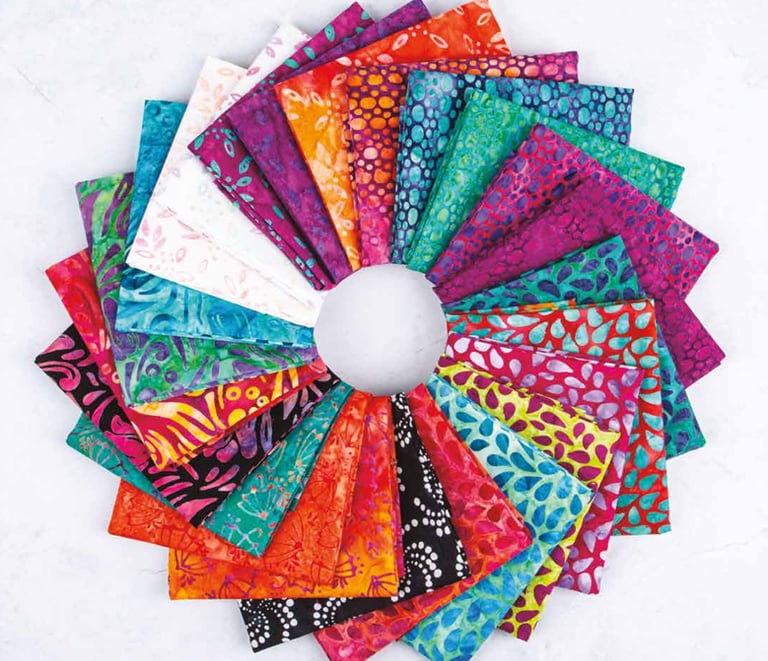
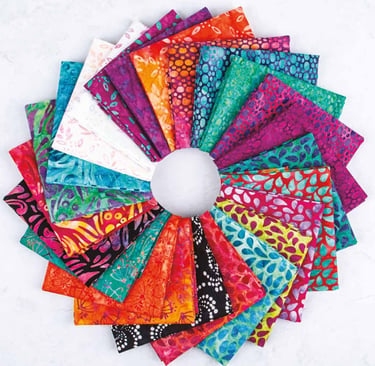
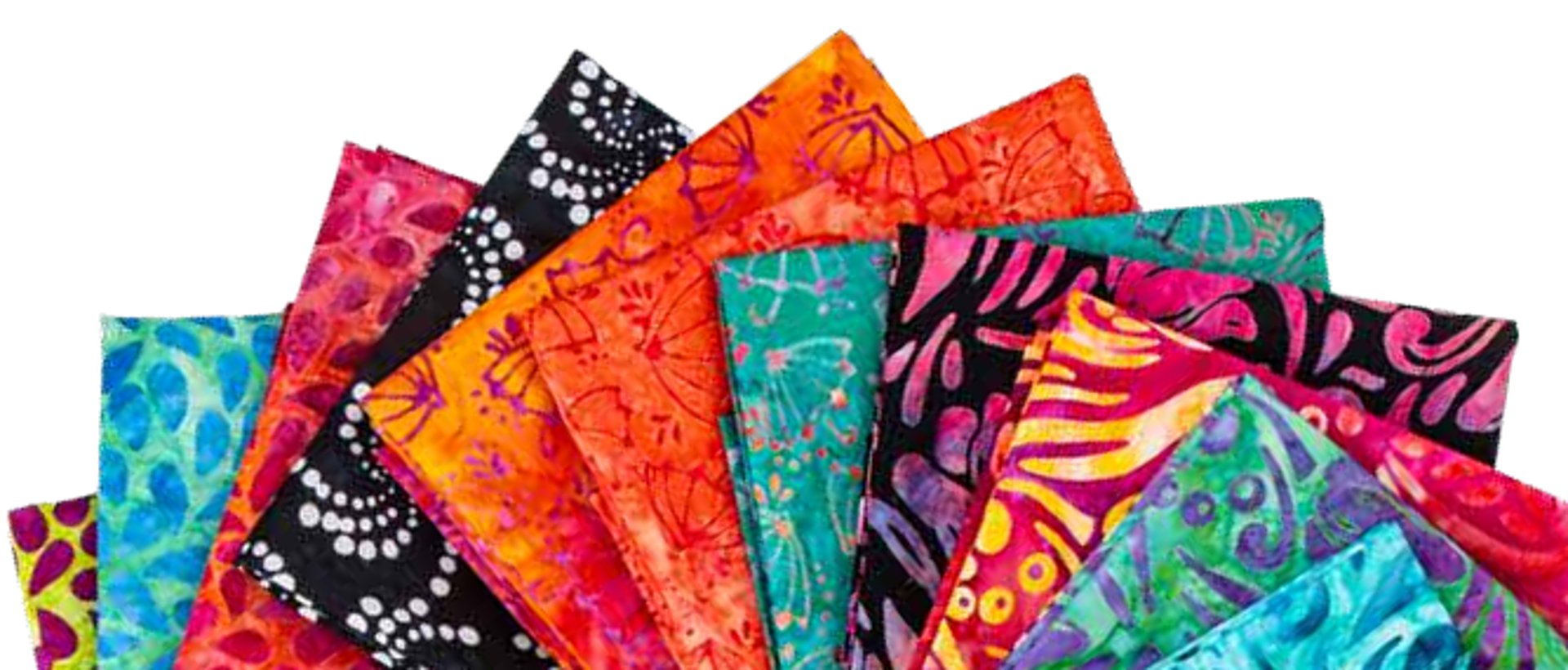
Batik is a method of wax-resist fabric dying. To put it simply, wax is used on the fabric to retain the current color, and then the fabric is dyed a darker color. So if you have yellow fabric, and draw wax swirls across it, then dip it in red dye, you'll end up with a red fabric with yellow swirls. This method of dying is often attributed to have originated in the vicinity of Southeast Asia, and many of the fabrics are still created there. This is why you will see terms such as "Bali," "Tonga" and "Island" associated with batiks.
What are Batik Fabrics?

Pros and Cons of Batiks
Pro: There is no "right" and "wrong" side
When working with batiks, since the dye goes all the way through, there is no correct side. You can decide which side looks best to you and that can be your "right" side. This makes techniques like Foundation Paper Piecing much easier, because you don't have to worry about which side is up.
Con: There is no "right" and "wrong" side
Likewise, if you need to easily see which side is the correct side, it's difficult with batiks. Like when you're sewing long borders or binding. it's very easy to get one piece turned around so the raw edges are on the front. I had a long-arm quilter even load my batik backing the wrong way, with the seam on the outside and quilted the entire thing because it's impossible to tell which way is right if you don't see a seam. (Don't worry, she made it right.)
Pro: There is no selvage
There is no selvage on the bottom of batiks. There is still a small edge of slightly thicker fabric to cut off, but no pesky designer name or company. That white band across the bottom isn't there. You get an extra half inch of fabric!
Con: There is no selvage
There is no identifying selvage to help you know what brand or line a paticular fabric is from. Right now in my sewing room, I have batiks from Island Batik, Hoffman of California, and a pile of who knows what that I got from my LQS, just because it looked pretty together. I didn't even look at the bolt to see what brand it was.
Pro: Thickness/Durablity
Due to the dying process using wax, the fabric is a bit thicker or more sturdy than other quilting cottons. This can be a good thing. It also cuts back on the number of loose threads. Batiks are very easy to tear (if you're into tearing vs cutting) and doesn't fray
Con: Tighter weave fabrics
The fabric of Batiks are slightly tighter than other quilting cotton. This could cause some difficulty with hand-stitching, or pinning. Some of my pins just don't go through batiks. For this reason, I choose to use clips.
Pro: Handmade Quality
Batilks have a far more hands-on creation than do fabrics like digitally printed designs. As such, there are slight irregularities in the fabrics. No two pieces are exactly the same. I quite like this mottled and tie-dye effect. I love that the background can all be made with the same color, but some blocks are slightly different shades or have a unevenness about the dye.
Con: Dye Bleeding
The dying process also leaves dye in the fabric. There will probably be some bleeding when you wash it. I have no had any extreme situations, but I do use Color Catchers when I was my quilts, especially if I've used any dark colors near light colors, batiks, or any fabric that has discolored my sewing machine while quilting.
Contact
tiffany@tialynndesign.com
© 2012-2026. All rights reserved.